
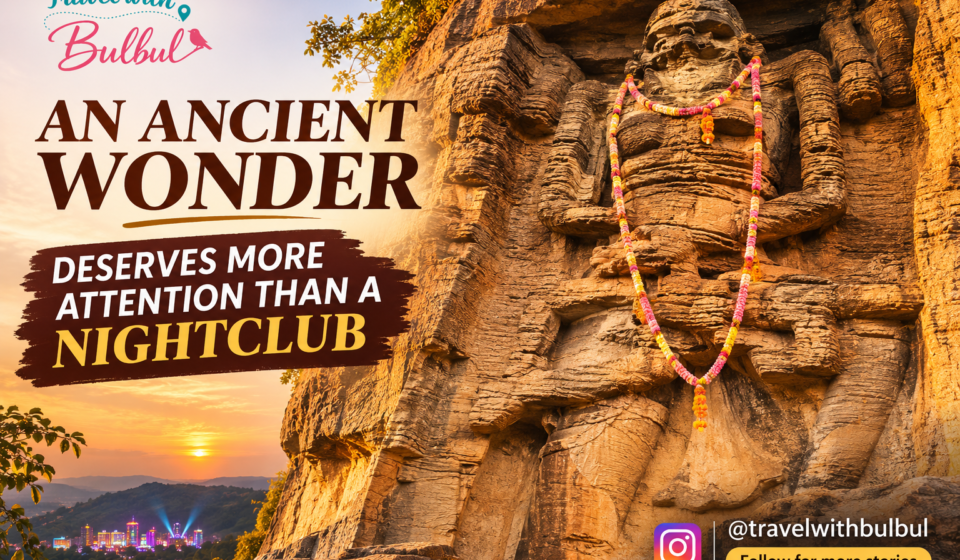
An Ancient Wonder That Deserves More Attention Than a Nightclub – Kalinjar Fort: The Giant Rock-Cut Sculpture of Bundelkhand

In a world where weekend plans often revolve around crowded clubs, loud music, and nightlife, imagine discovering a magnificent sculpture carved directly into a massive rock face centuries ago.
No modern machinery. No sophisticated construction equipment. Just extraordinary craftsmanship, artistic vision, and generations of human ingenuity.
Deep in the historic region of Bundelkhand, India’s landscape preserves remarkable examples of ancient architecture and rock-cut art. Some of these creations are so imposing that standing before them makes you wonder how people managed to create such masterpieces with the tools available at the time.
One remarkable example is the colossal rock-cut sculpture of Kal Bhairav associated with Kalinjar Fort in Uttar Pradesh.
It is a reminder that some of India’s greatest attractions aren’t necessarily the places everyone is talking about. Sometimes, they’re the historical treasures waiting quietly to be discovered.
The Magnificent Rock-Cut Art of Bundelkhand
Bundelkhand spans parts of Uttar Pradesh and Madhya Pradesh and is known for its forts, temples, historic settlements, and extraordinary stone architecture.
The region’s historical landscape reflects the artistic and architectural achievements of different periods and dynasties.
Among its most fascinating attractions are sculptures carved directly into natural rock formations.
Unlike a conventional statue assembled from separate blocks of stone, a rock-cut sculpture is created by removing material from the rock itself to reveal the intended figure.
This approach demands careful planning and an exceptional understanding of the material.
Every cut matters. A mistake in the wrong place could permanently damage the artwork.
When you look at a colossal sculpture carved into a rocky hillside, you’re seeing more than a religious figure. You’re witnessing the result of artistic skill, patience, and an understanding of stone that allowed ancient craftsmen to transform natural landscapes into works of art.
Kalinjar Fort: Where History Meets the Mountains
One of Bundelkhand’s most fascinating historical destinations is Kalinjar Fort, located in the Banda district of Uttar Pradesh.
Standing on a rocky hill in the Vindhyan landscape, the fort has long been associated with regional history, military power, and religious traditions.
The fort’s historical significance extends beyond its defensive structures. Within the complex are temples, rock-cut features, and sculptures that reflect the area’s rich artistic heritage.
The Neelkanth Temple is one of its important religious landmarks.
The surrounding rock faces preserve remarkable carvings, including a monumental representation of Kal Bhairav.
For visitors interested in history, architecture, and photography, Kalinjar offers a very different experience from India’s more commercial tourist destinations.
Here, the landscape itself becomes part of the attraction.
The Incredible Craftsmanship Behind Colossal Sculptures
How did ancient artisans create such enormous figures?
The precise techniques varied across periods and locations, but rock-cut sculpture generally required several stages of work.
1. Selecting the Rock Face
The craftsmen needed suitable rock with the right structural characteristics.
The quality, stability, and shape of the stone influenced what could be carved and how the work could proceed.
2. Planning the Sculpture
Large sculptures required careful consideration of proportions, posture, and placement.
Artists had to envision the finished figure while working with a solid mass of stone.
3. Removing the Stone
The desired form emerged as craftsmen gradually removed unwanted material.
This process required control and precision because the stone could not simply be replaced if too much was removed.
4. Refining the Details
After establishing the main form, artisans worked on finer features, including facial expressions, ornaments, limbs, and symbolic elements.
The scale of a sculpture makes these details especially impressive. Even after centuries of exposure, surviving carvings can reveal the artistic ambitions of their creators.
The result is a remarkable combination of engineering, craftsmanship, and cultural expression.
Why Are These Historical Places So Fascinating?
Ancient monuments offer something that modern attractions cannot easily reproduce: a direct connection to the people who lived before us.
They encourage us to ask questions.
Who commissioned these sculptures? How were the craftsmen trained? What tools did they use? How did they transport materials and organize such demanding work?
The answers help us understand the societies that created these monuments.
They also remind us that technological progress doesn’t diminish the achievements of earlier civilizations. Instead, it gives us new ways to appreciate the ingenuity that existed long before modern technology.
For travellers who enjoy exploring beyond popular destinations, places such as Kalinjar Fort can provide a deeper understanding of India’s history and artistic traditions.
Why Bundelkhand Deserves a Place on Your Travel List
If you’re interested in heritage tourism, Bundelkhand offers plenty of reasons to explore.
Consider adding these experiences to your travel plans:
- Explore historic forts: Discover the architecture and strategic importance of the region’s fortifications.
- Visit ancient temples: Learn about the religious traditions and architectural styles represented in historic temple complexes.
- Discover rock-cut sculptures: Observe how artisans transformed natural stone into monumental works of art.
- Explore lesser-known destinations: Look beyond heavily promoted tourist attractions to discover regional history.
- Support responsible tourism: Respect local customs, protect historic structures, and avoid damaging fragile carvings.
Before visiting, check local access arrangements, opening hours, and travel conditions.
Remember that historical monuments are irreplaceable. Responsible tourism helps preserve them for future generations.
India’s Heritage Is More Than Just Its Famous Monuments
When people think about India’s historical architecture, they often begin with famous landmarks such as the Taj Mahal or the monuments of Delhi.
But India’s heritage extends far beyond its best-known attractions.
Across the country, lesser-known forts, temples, sculptures, and archaeological sites preserve stories of artistic innovation and cultural change.
Bundelkhand is one such region where exploring beyond the obvious can lead to extraordinary discoveries.
The next time you’re planning a trip, consider choosing a destination that allows you to experience history rather than simply photograph it.
You might discover that the most memorable travel experiences are found in places you had never heard of before.
Final Thoughts: Look Beyond the Usual Weekend Plans
A nightclub may offer a memorable evening, but a centuries-old monument can leave you thinking about history long after you’ve returned home.
The giant rock-cut sculptures of Bundelkhand are powerful reminders of what human creativity can achieve.
They invite us to slow down, look closely, ask questions, and appreciate the work of people whose names we may never know.
India has countless historical treasures waiting to be explored.
Sometimes, all it takes is a different destination and a little curiosity to discover them.
What would you choose for your next adventure: a night out at a club or a journey into India’s ancient history?
Share your thoughts in the comments!
Explore More with Influbid
Are you a creator who loves sharing travel discoveries, historical places, and cultural experiences?
Influbid helps creators access tools designed to simplify Instagram engagement and share links with their audiences.
Explore Influbid LinkFlow to learn how Instagram comment automation and automated direct messages can help creators manage audience interactions and share relevant links.
Turn your audience’s curiosity into meaningful conversations while you focus on creating content worth discovering.
